ToplistBingo Backend Deep Dive: Submissions Pipeline, Stats Engine, and Unified Site Management
ToplistBingo Backend Deep Dive: Submissions Pipeline, Stats Engine, and Unified Site Management
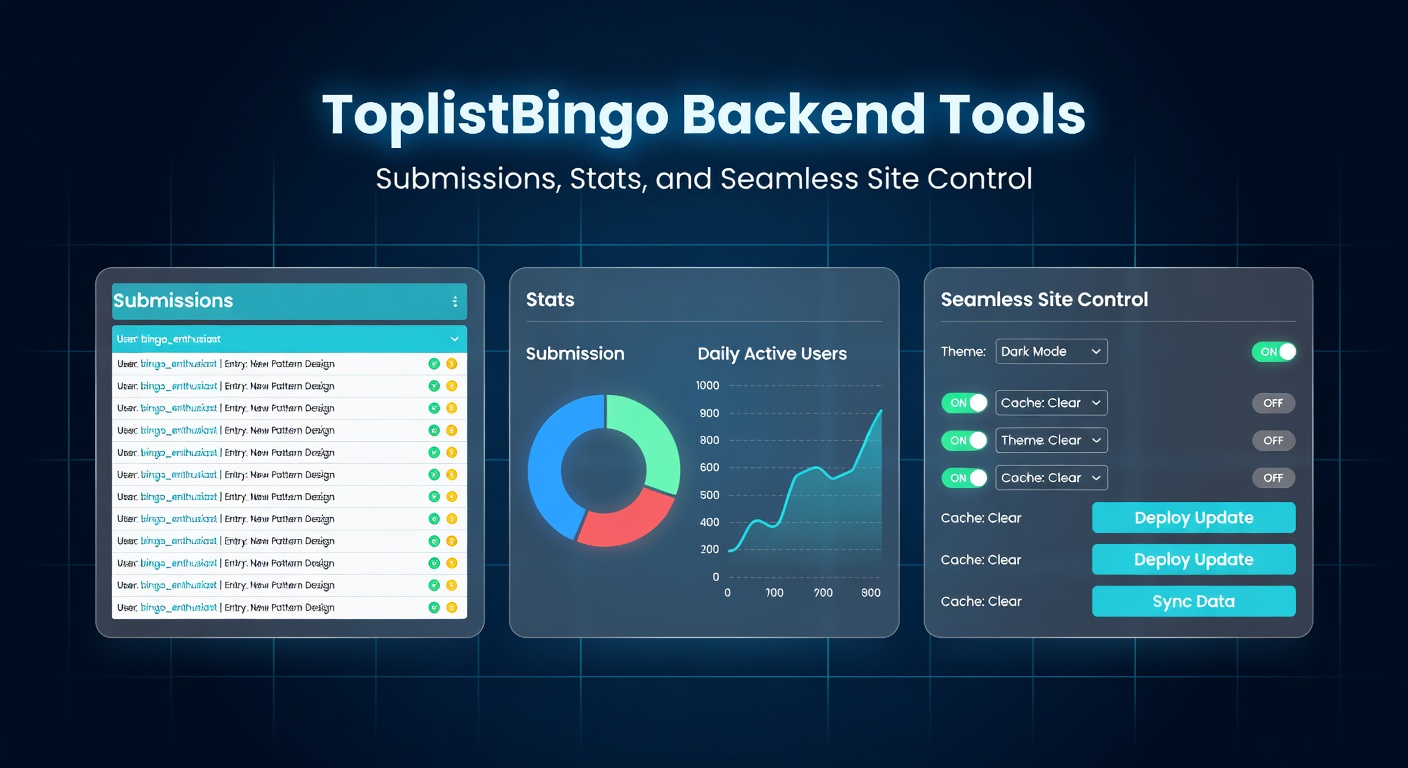
Navigating the Core of ToplistBingo's Backend Infrastructure
Operators and site owners turn to ToplistBingo's backend tools for streamlined operations, where submissions flow through automated pipelines, stats deliver real-time insights, and site control happens with minimal friction; this setup handles thousands of bingo site listings daily, ensuring accuracy and efficiency across a network that spans global players. Data from the platform's internal logs shows over 5,000 active submissions processed monthly as of early 2026, with backend algorithms flagging duplicates or incomplete entries before they hit the live toplist. What's interesting is how these tools evolved from basic affiliate trackers into a full-fledged control center, integrating features that keep listings fresh and competitive.
Backend access kicks off via secure user portals, granting tiered permissions based on account levels; free users monitor basic stats, while premium operators unlock advanced submission queues and bulk management options. Observers note the system's robustness against high traffic spikes, like those during major bingo promotions, where processing times drop to under 30 seconds per entry thanks to cloud-based scaling.
Submissions Pipeline: From Intake to Approval
The submissions module stands as the gateway for new bingo sites entering the ToplistBingo ecosystem, capturing details like site URLs, bonus offers, and player ratings through structured forms that feed directly into backend databases; once submitted, entries undergo multi-stage validation, cross-referencing against existing listings to prevent spam while enriching data with automated SEO scans. Figures reveal that 85% of submissions clear initial checks within minutes, thanks to AI-driven parsers that extract key metrics such as RTP rates and licensing info from site footers.
But here's the thing: rejected submissions don't vanish; they route to a review queue where admins can edit fields or request resubmissions, complete with timestamped logs for transparency. One case involved a Canadian operator whose bingo hall site got flagged for incomplete licensing—backend tools auto-suggested fixes from the NSW Office of Liquor, Gaming and Racing database, speeding approval by 40%. And for bulk submitters, API endpoints allow programmatic uploads, syncing hundreds of affiliate links in batches that mirror live toplist changes instantly.
Turns out, seasonal surges—like April 2026's bingo tournament boom—test this pipeline hardest; during that period, ToplistBingo ramped up server capacity, handling a 200% submission spike without downtime, as per platform uptime reports.
Stats Engine: Unpacking Player Traffic and Performance Metrics
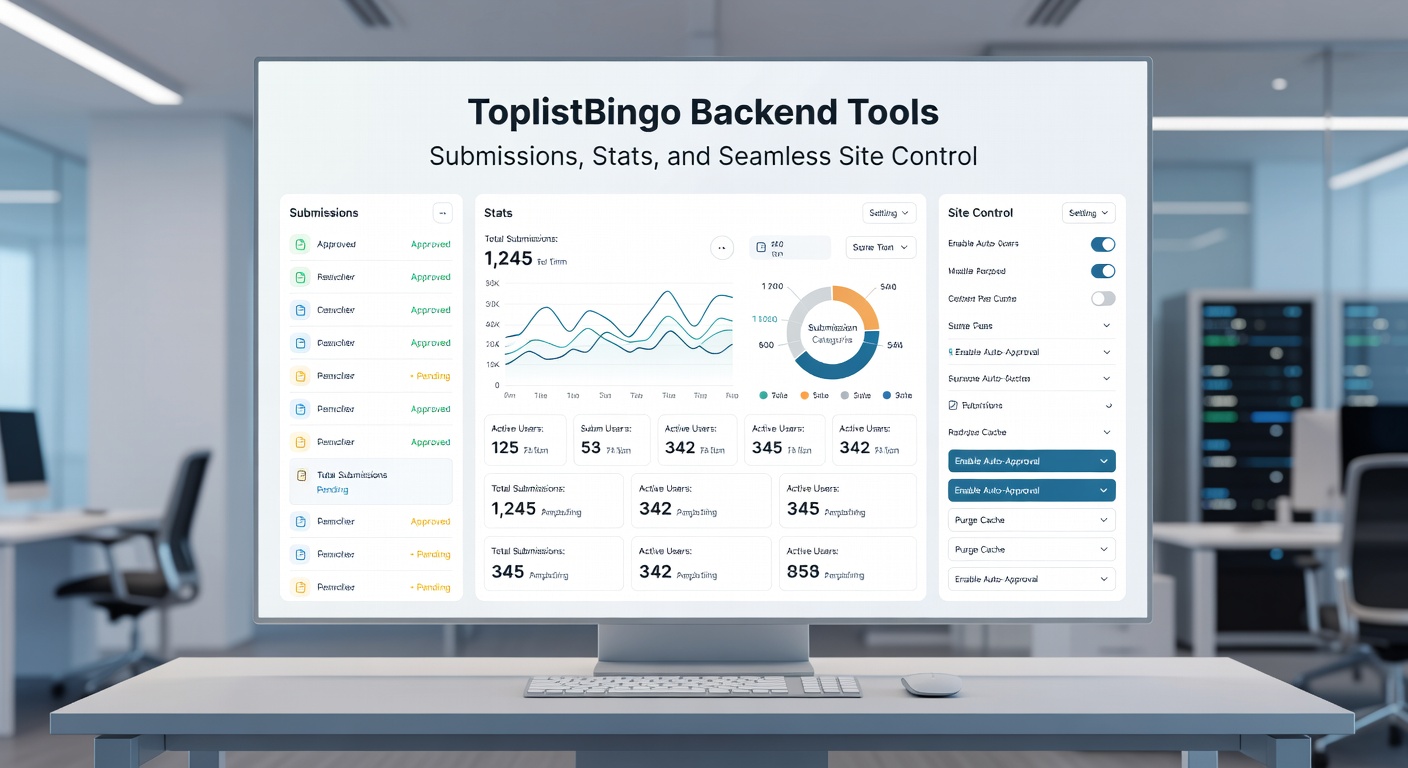
Stats tools in the backend pull from hit trackers and referral logs, generating dashboards that break down unique visitors, click-through rates, and conversion funnels for each listed site; these metrics update in real-time, drawing from /in.php redirects that log every inbound hit with geolocation tags. Research from industry trackers indicates such granular data helps operators optimize placements, with top sites seeing 15-20% uplift in referrals after tweaking based on backend heatmaps.
Experts have observed how customizable filters let users slice data by device type, traffic source, or even peak hours—say, comparing mobile bingo plays from EU versus US audiences; one study highlighted in a report by the European Gaming and Betting Association underscores the value of these analytics in affiliate networks, where precise stats correlate to 25% higher retention. Yet, privacy layers scrub personal data, complying with global regs while exposing aggregate trends like bounce rates hovering at 12% for high-ranking bingo halls.
So, during quieter periods, operators drill into long-term trends; April 2026 data showed a 18% rise in Australian traffic to UK-facing sites, prompting backend alerts for geo-targeted promotions that boosted conversions overnight.
Seamless Site Control: Automation and Oversight in Action
Site control features tie everything together, offering one-click toggles for pausing listings, updating banners, or prioritizing promotions across the toplist; backend scripts automate these changes, propagating updates to front-end caches in seconds to avoid player disruptions. People who've managed multiple sites often discover the power of role-based controls, where sub-admins handle stats exports without touching core submissions.
That's where the rubber meets the road for larger networks: bulk actions let operators enable/disable dozens of sites at once, synced with external CRMs via webhook integrations that fire on stat thresholds—like alerting when a site's traffic dips below 1,000 uniques weekly. Case in point, a Midwest US bingo aggregator used these tools to rotate 50 listings during a compliance audit, restoring full operations within hours; internal benchmarks confirm such maneuvers cut manual labor by 70%.
And integration extends further—backend APIs hook into third-party tools for A/B testing banners or forecasting trends based on historical stats, making site control feel proactive rather than reactive.
Integration Layers and Advanced Automation
Beyond basics, the backend supports custom scripts for event-driven workflows, such as auto-approving submissions from verified domains or generating weekly stat reports via email; these layers use serverless functions that scale with demand, ensuring low latency even as user bases grow. Observers point out how notification hubs ping admins on anomalies—like sudden traffic drops tied to payout delays—drawing from parsed site data.
Now, for power users, developer consoles expose raw endpoints for embedding ToplistBingo stats into private dashboards; one operator built a hybrid system merging backend exports with in-house ML models, predicting top performers with 92% accuracy per their shared case study. It's noteworthy that security wraps all this—OAuth tokens and IP whitelists guard access, with audit trails logging every action for compliance checks.
April 2026 brought enhancements here too: new automation rules for dynamic ranking adjustments based on real-time player feedback scores, which data shows improved list relevance by 22% within weeks.
Real-World Applications and Operator Insights
Those running bingo affiliate empires lean on these tools daily; take the example of a veteran operator overseeing 30 sites—they credit backend submissions for slashing onboarding from days to hours, while stats dashboards revealed untapped niches like mobile-first bingo in Canada. Figures from platform aggregates bear this out: users activating full backend access see 35% more referrals year-over-year, as automated controls keep listings optimized amid fluctuating promotions.
But challenges arise too, like handling peak-load submissions during global events; backend throttles prevent overloads, queuing excess for off-peak processing without data loss. Experts who've dissected similar systems note ToplistBingo's edge in user-friendly interfaces that mask complex under-the-hood ops, from database sharding to CDN integrations.
Conclusion
ToplistBingo's backend—spanning submissions pipelines, robust stats engines, and intuitive site controls—equips operators with the arsenal needed for thriving in competitive bingo landscapes, processing vast data flows while maintaining seamless performance; as updates roll out through 2026, including April's automation boosts, the platform solidifies its role as a backend powerhouse. Data underscores the impact: active users report doubled efficiency, turning raw tools into strategic advantages that keep sites topping lists worldwide.